Incoterms 2026: A Practical Guide
Understand international trade terms like FOB, CIF, DDP, and EXW. Learn who pays for shipping, insurance, customs clearance, and where responsibility transfers between buyers and sellers.
International trade involves more than simply buying and selling goods. Every shipment requires clear agreements between buyers and sellers regarding who pays for transportation, who arranges insurance, and who is responsible if something goes wrong during transit.
This is where Incoterms come in.
Published by the International Chamber of Commerce (ICC), Incoterms are internationally recognised trade rules that define the responsibilities of buyers and sellers during international transactions. Understanding these terms helps businesses avoid disputes, reduce unexpected costs, and ensure smoother global trade.
Whether you're importing products for your business or exporting goods to customers overseas, knowing the basics of Incoterms is essential.
What Are Incoterms?
Incoterms, short for International Commercial Terms, are standardised rules used in international trade contracts.
They define:
Who pays for transportation
Who arranges freight
Who purchases cargo insurance
Who handles export documentation
Who is responsible for customs clearance
Where the risk transfers from seller to buyer
Using Incoterms creates clarity and reduces misunderstandings between trading partners across different countries.
Why Are Incoterms Important?
Without clearly defined shipping terms, buyers and sellers may disagree over who is responsible for transportation costs, customs duties, damaged goods, or delivery delays.
Using the correct Incoterm helps businesses:
Reduce contractual disputes.
Clearly allocate responsibilities.
Improve shipping efficiency.
Simplify customs procedures.
Better estimate total landed costs.
For importers and exporters alike, understanding Incoterms is a critical part of international logistics.
Common Incoterms Explained
EXW (Ex Works)
Under EXW, the seller makes the goods available at their premises.
The buyer is responsible for almost everything, including:
Collecting the goods.
Export clearance.
International shipping.
Insurance.
Import customs.
Delivery to the final destination.
EXW offers the seller the least responsibility and the buyer the most.
FOB (Free on Board)
FOB is commonly used for ocean freight.
The seller is responsible for delivering the goods onto the vessel at the agreed port of departure.
Once the cargo is loaded onto the ship, responsibility transfers to the buyer.
The buyer then pays for:
Ocean freight
Insurance
Import duties
Customs clearance
Final delivery
FOB is popular because responsibilities are clearly divided.
CIF (Cost, Insurance and Freight)
With CIF, the seller pays for:
Ocean freight
Cargo insurance
Transportation to the destination port
However, once the goods arrive at the destination port, the buyer becomes responsible for:
Import duties
Customs clearance
Local delivery
Inland transportation
CIF provides buyers with greater convenience during international transport.
DDP (Delivered Duty Paid)
DDP places almost every responsibility on the seller.
The seller pays for:
Export procedures
International transportation
Insurance
Import duties
Taxes
Customs clearance
Final delivery
The buyer simply receives the goods without handling customs procedures.
DDP is often preferred by customers because it offers a predictable purchasing experience with no unexpected import charges.
Choosing the Right Incoterm
The best Incoterm depends on your business needs.
Consider:
Your experience with international shipping.
Whether you have a freight forwarder.
Your budget.
Your ability to manage customs procedures.
The destination country's import requirements.
Businesses new to importing often prefer DDP because the seller manages most logistics, while experienced importers frequently choose FOB to gain greater control over shipping costs.
Common Mistakes to Avoid
Many businesses misunderstand Incoterms, leading to unexpected expenses.
Avoid these common mistakes:
Assuming every shipping cost is included.
Ignoring customs responsibilities.
Choosing an Incoterm without understanding risk transfer.
Forgetting cargo insurance requirements.
Using incorrect Incoterms in purchase agreements.
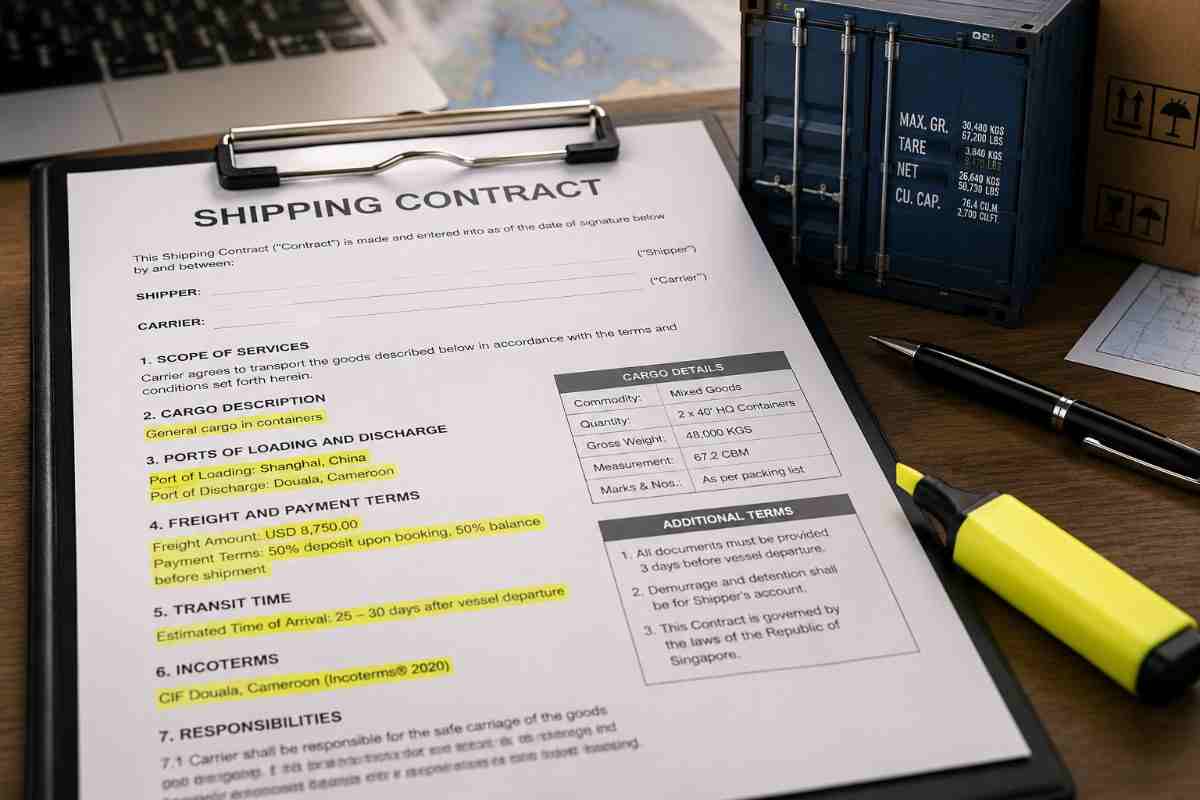
Carefully reviewing your shipping contract before placing an order can prevent costly misunderstandings later.
How Kassongo Express Can Help
International shipping agreements can seem complex, especially for businesses importing goods for the first time.
Kassongo Express helps customers understand shipping responsibilities before cargo leaves the supplier.
Our logistics specialists assist with:
Freight forwarding
Customs documentation
Cargo insurance guidance
Shipping quotations
Import planning
International logistics support
We help ensure every shipment follows the most appropriate shipping terms for your business.
Final Thoughts
Incoterms are the foundation of international trade agreements. Understanding the differences between EXW, FOB, CIF, and DDP allows buyers and sellers to clearly define responsibilities, reduce disputes, and better manage shipping costs.
Before importing or exporting goods, always confirm which Incoterm applies to your shipment and ensure everyone involved understands their obligations.
A little preparation today can prevent expensive surprises tomorrow.
Call to Action
Need help understanding your shipping agreement? Contact Kassongo Express today and let our logistics experts explain the best Incoterm for your shipment and provide a tailored international shipping solution.